
The story of Kisasa Football Club begins before the actual football pitch gets involved.
With plenty of talented youth in Nairobi eager for development opportunities, the need for grassroots organisations coincides with a larger need for the infrastructure and support to nurture and manage individual budding projects. By virtue of its very name, Kisasa FC is a football club (soccer, for all North American readers). It is the engine and beating heart that galvanises our community around football, using athletics as a vessel to realise the sport at its best.
Why Football?
What motivates such a level of commitment, shared among coaches, parents, family and friends the world over? What potential rests here for everyone involved? For us, football calls for the individual to see themselves in relation to the whole, a common feature of team sports. Far-ranging traits are fostered in the athlete as an individual: determination, tenacity, ambition, drive. Stamina, for instance, the concept of training oneself to continually extend one’s limits, develops resilience.
Among the most important, players become effective communicators. Communication is taught to be clear and loud, fostering in the individual a sense of confidence. Tactics? One proactively develops the skill to plan, encouraging discernment, training foresight. Furthermore, as with all athletics, football is a great leveller. It brings us into contact with individuals we might not otherwise interact with. One shares their teammates’ language in little phrases, that language serving as a doorway to culture. One begins to see their teammates’ weaknesses as well as their strengths, and almost instinctively learns how to support them where they are short.
What Makes It Sustainable
When the coaches are ambitious, the players determined and the equipment available, the routine seems simple enough. The aims are not that complicated: win against the other team on the field by outscoring them. While that is fundamental to sport, how it is achieved is where community forms, and it is where individual sports begin to differ. In football, roles extend beyond the pitch to coaching staff, a medical team, administrative staff working off the pitch, and partners supporting the whole operation.
For an after-work, after-school, essentially non-profit effort like Kisasa, what makes this sustainable? Sustainability can look like many different things, and it can be built into the idea. Structures with members and income streams, perhaps better considered as long-term planning, are viable. There are no illusions of immediate growth. There is also no shortness of ambition. The first thing to do is to build the moniker of any progress to come: football.
The Trials
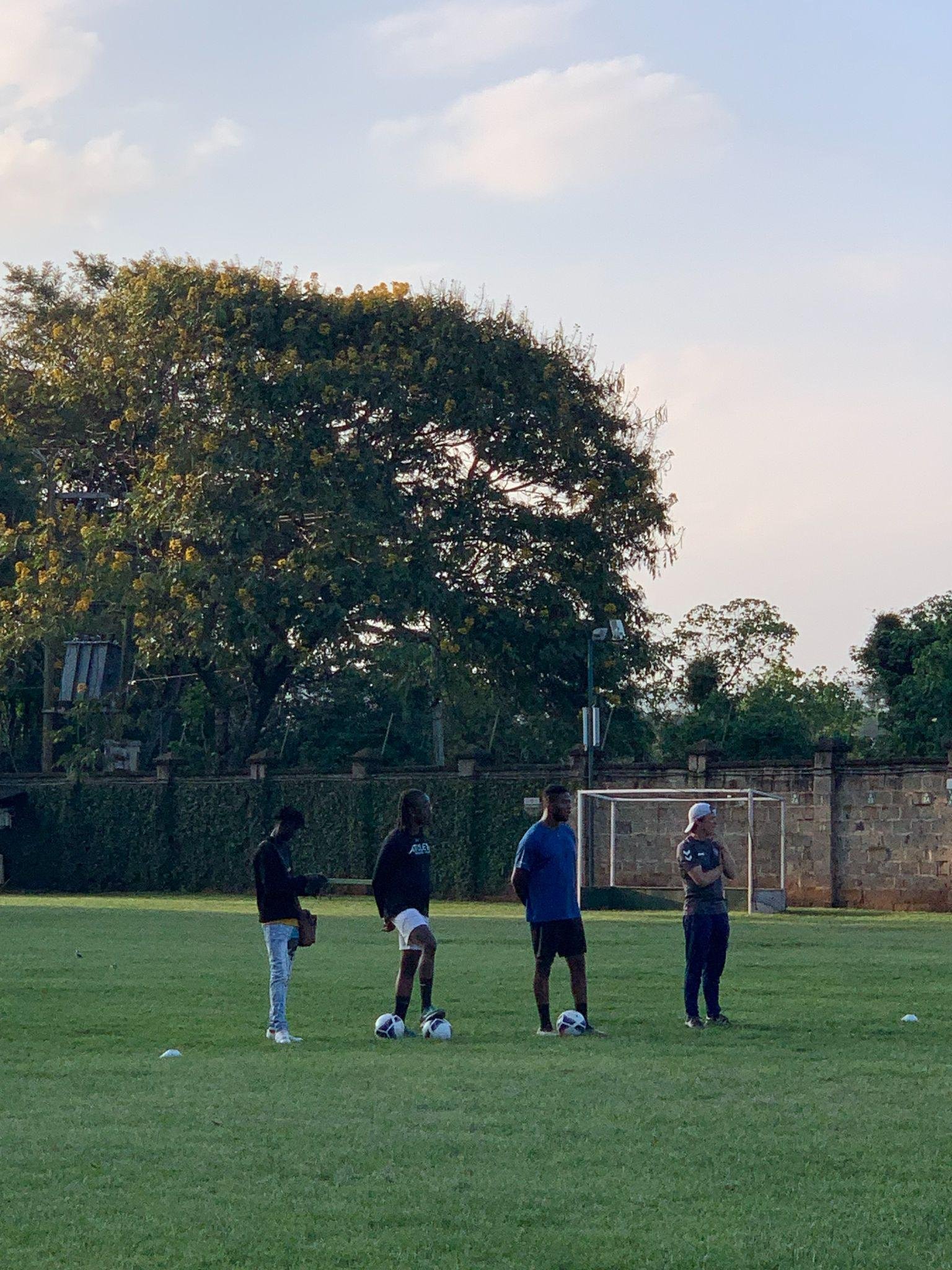
That groundwork leads directly to the pitch. The trials for Kisasa FC, which took place in March, coincided with the early advent of the Kenyan rainy season. They brought together boys scouted from the Gigiri-situated Rosslyn Academy, and the nearby areas of Gachie, Runda, Ruaka and Ndenderu. For the next few weeks, boys rotated in and out of the under-16 side, until a team of 23 had been formed which demonstrated the quality, determination and drive to compete. In training, the footballer switches roles and has their versatility tested. That is one of the reasons trials exist in the first place: what makes you stronger is not only how good you are, but how well you can adapt to the circumstances.
The Coaches
This is one reason coaching is such a fundamental part of football. Having individuals in place with the right skillset to bring out the best in young men by harnessing potential they sometimes do not realise they have can be life changing. It begins during simple 6v6s, with our coaches monitoring and evaluating while imparting instruction and guiding principles. Out of this managing and mentorship, responsibility is nurtured. Motivating our players towards stronger, more resilient mentalities becomes a coach’s foremost tool. In the culture of Kisasa FC, one is taught to take ownership of their own shoes, their kit, and how they carry themselves. How eagerly one calls for the ball often reflects on how well they will perform when it is at their feet, and so if you are going to ask for it, Coach JT may say, scream loud!
During week one of trials, one often saw the coaches standing and talking, in poses reminiscent of the great coaches during practice sessions. In their own huddle, they would share knowledge, inform each other about the day’s observations, and discuss who was getting closer to making our first roster. And so it was that Oluniyi Carew, founder and vision-bearer of Kisasa FC, would arrive ready every day of trials, watching what was once a dream begin to take shape.
Where We Would Compete
The Diamond Youth Football League. Launched at the end of 2024, the DYFL’s mission is to elevate youth football in Nairobi by creating competitive match-day experiences under committed management that places emphasis on equal and frequent playing time, fairness, and quality refereeing. Aligning with the calling to fortify development opportunities for young athletes, the DYFL proved ideal for a grassroots development project such as ours. Create access to a fair development opportunity, and let the boys do the rest. And they do.
A common sight at the end of trial days: the players would make a circle, linking arms over shoulders to receive final words from our coaches. Depending on the session, Coach Brice Salzmann, Coach John Nyakundi or Coach Mikael Ingedia would deliver imparting words. A player would be invited to pray over the session and the remainder of the evening. The coaches instructed that rest would be needed. A rotating selection of players would go home with sports science devices to monitor health patterns over time. And the work that would see Kisasa FC reach the final of the Diamond Youth Football League in our first season would quietly continue.